The Hunt for Vintage Lighting
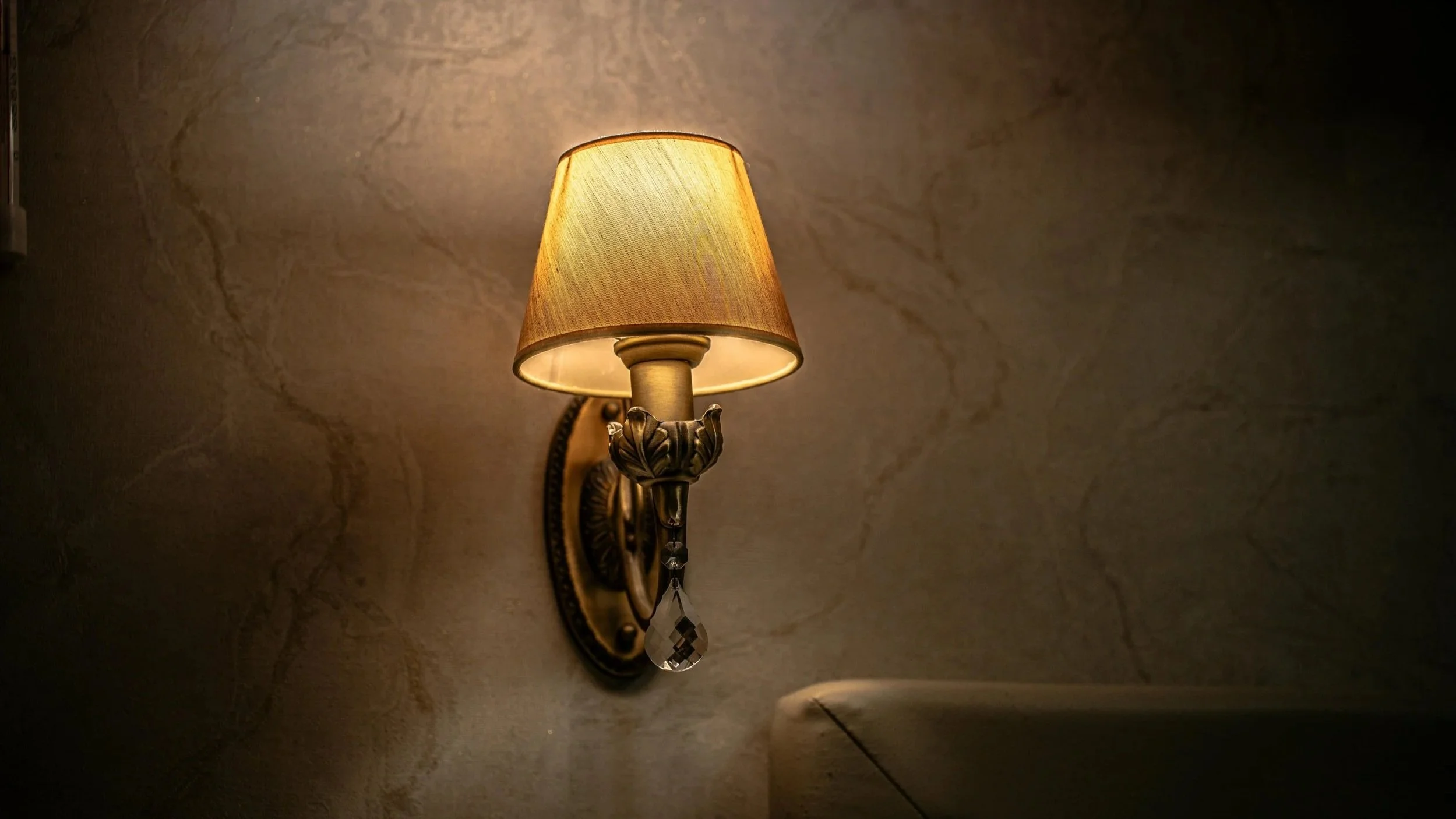
Written by Margaret Nubuor
Founder & Interior Designer, Nubuor Designs
There is a particular kind of satisfaction that comes from finding the right vintage fixture for a room. It is different from the satisfaction of selecting something from a catalog knowing it will arrive in six weeks in perfect condition. The feeling is quieter than that, and more lasting. The satisfaction of recognizing an object, understanding what it is, what it was made for, and what it might become in the right context. Knowing that you are adding something to a home that could not have been bought any other way.
Vintage lighting is one of the most rewarding areas of the design process for us, and one of the most misunderstood by clients who haven't encountered it before. It is not a budget strategy or a trend. It is a commitment to objects that were made when making things well was the only option, and to the particular beauty that comes from something that has lived in the world long enough to develop a point of view.
Where We Look
The search for vintage lighting takes us to very different places depending on the project and the room. For pieces with real provenance and curatorial depth, 1stDibs has become an indispensable resource. The breadth of what is available there, across decades, countries, and aesthetic movements, opens up possibilities that no showroom or trade vendor can match. A search that begins with a general sense of scale and period can lead to objects from a Parisian apartment, a Danish studio, or an Italian glassworks that reframe the entire direction of a room.
For the more tactile, unpredictable pleasure of the hunt, nothing replaces Brimfield. The Brimfield Antique Flea Market in Massachusetts is one of the great treasure grounds in the country, and walking it with a specific room in mind is one of the more absorbing ways to spend a morning. The finds are never guaranteed, which makes them meaningful when they appear. A Danish Modern pendant found in a crowded booth at Brimfield, slightly dusty carries a different weight than the same object sourced through a dealer. It has been found rather than purchased, which is a distinction that matters.
The Marché aux Puces in Paris occupies its own category entirely. Walking the covered alleys with the particular quality of northern European light coming through the glass roofs above, surrounded by the accumulated objects of several centuries of French decorative art, is an experience that informs the eye in ways that are difficult to articulate and impossible to replicate elsewhere. The lighting available there, Art Deco bronze sconces, Mid-Century Italian pendants, Belle Époque chandeliers with their original crystals still intact. It exists there because it has always been there, which is exactly the point.
The Periods We Return To
Not all vintage lighting is worth the pursuit, and a developed eye is what separates a meaningful acquisition from an expensive mistake. The periods we find ourselves returning to most consistently are the ones where the relationship between form, material, and function was most rigorously considered.
Danish Modern lighting of the 1950s and 1960s occupies a special place in our hearts. The Danes understood light in a particular way, as something to be shaped and directed rather than simply produced, and their fixtures reflect that understanding in every detail. Clean geometry, honest use of material, and a restraint that makes them work in contemporary interiors as naturally as they did in the mid-century rooms they were designed for.
Art Deco is the period for drama and extraordinary metalwork. The brass, bronze, and wrought iron work of the 1920s and 1930s has a precision and an ambition that contemporary production rarely matches. An Art Deco torchère or a pair of gilded sconces from this period brings a formality and a glamour to a room that reads as genuinely sophisticated rather than merely expensive.
Italian Mid-Century lighting is perhaps our deepest source of inspiration. The Italian designers of the postwar period treated the light fixture as a sculptural object first and a functional one second, and the results are some of the most beautiful objects in the history of decorative art. Fixtures from this period by designers like Arredoluce, Stilnovo, and Fontana Arte are collected seriously and priced accordingly, but even lesser-known examples from the same period carry the same sculptural confidence and the same quality of material.
Murano glass deserves its own consideration. The glassblowers of Murano have been producing extraordinary work for centuries, and the chandeliers, pendants, and sconces that emerged from the island's workshops in the mid-twentieth century represent a peak of that tradition. A Murano chandelier, with its hand-blown glass flowers or its cascading tiers of colored crystal, is one of the most breathtaking objects a room can contain. It is also one of the most specific, and placing it requires a room and a client with the confidence to let it be the undisputed center of attention.
The Practical Reality
Pursuing vintage lighting is not without its complications, and understanding them is part of loving them.
Any fixture sourced through a flea market, an antique dealer, or an online platform will almost certainly require professional restoration before it can be safely installed. Wiring standards have changed considerably over the decades, and a fixture that is not brought up to current electrical code is a safety risk regardless of how beautiful it is. We work with trusted artisans who specialize in exactly this work: updating wiring, replacing sockets, sourcing period-appropriate hardware, and in some cases repairing damage or restoring missing elements so that the finished fixture is both historically faithful and completely safe to live with.
The restoration process adds time and cost to the sourcing process. It also adds something that cannot be manufactured: the knowledge that the object has been cared for, that it has been understood and attended to, and that it will continue to perform and to age well for decades to come. That care is part of what makes a vintage fixture a considered acquisition rather than a transaction.
Why It Matters
Placing a vintage fixture in a new or contemporary interior is one of the most powerful moves available in a design project. It adds soul and patina. It signals that the room has been thought about rather than assembled, and that the client values objects with history alongside objects with novelty.
The contrast works in both directions. A vintage Danish pendant in a clean, contemporary kitchen creates a warmth and an individuality that the room would otherwise lack. A Murano chandelier in a modern dining room brings a lightness and an artistry that elevates the details around it rather than competing with them. In both cases, the vintage piece does something the room could not do for itself: it gives it a sense of time, of accumulation, of having been loved before it arrived where it now lives.
That quality is, in the end, what we are always looking for in a well-designed home. Not the appearance of having been designed, but the feeling of having been lived in, considered, and cared for over time. Vintage lighting is one of the most direct and most beautiful paths to that feeling.
Nubuor Designs is an interior design studio based in Beacon Hill, Boston, working with homeowners across the country who believe that a well-curated space is one of life's great pleasures. If you're ready to make yours one of them, we'd love to hear more about you and your home. Let's Talk.
Related Posts: