What the Quartz Conversation Is Really About
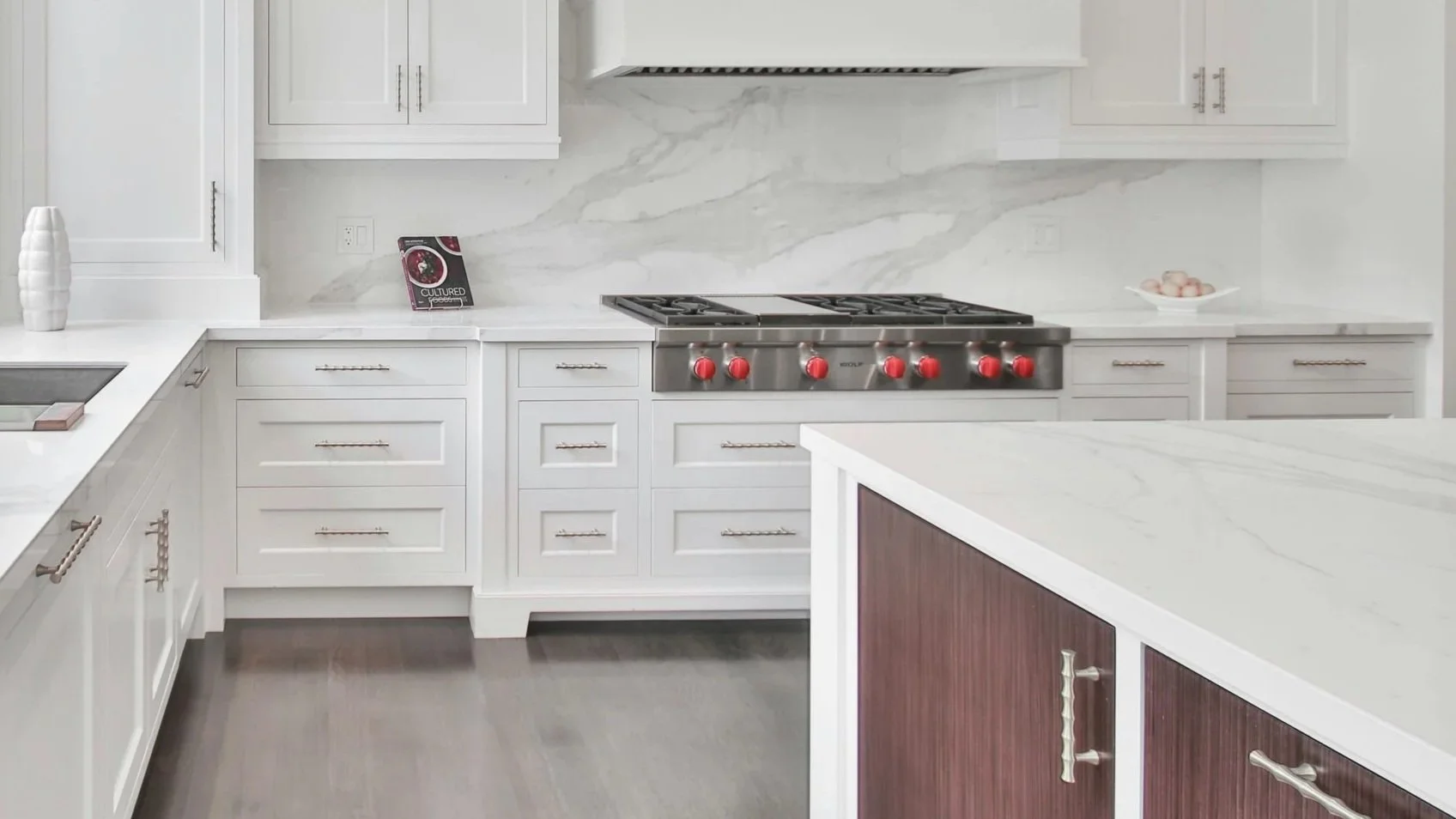
If you’re a homeowner looking to renovate or have quartz in your home, you may have seen headlines about California moving to ban quartz countertops. The short version: it is not actually about the countertop already in your home. It is about the workers cutting it, and is worth understanding before your next kitchen or bathroom renovation.
Here is what is happening and what it means.
Quartz and Quartzite Are Not the Same Thing
Before anything else, a clarification that comes up constantly and matters here. Engineered quartz and natural quartzite are two entirely different materials. Natural quartzite is real stone, formed in the earth, quarried, and cut into slabs. Engineered quartz is manufactured, typically more than ninety percent crushed minerals mixed with plastic-based resins and pressed into slabs. One comes from the ground while the other is made in a factory. Both contain high levels of silica, but they are not interchangeable, and that distinction matters in this conversation.
The Actual Problem
When engineered stone is cut, ground, and polished at a fabrication shop, it releases microscopic silica dust. That dust, when inhaled repeatedly over time, can cause silicosis, a serious and irreversible lung disease. Since 2019, California has recorded approximately 660 confirmed silicosis cases and 35 deaths among workers at engineered stone fabrication shops. Officials estimate that without action, roughly 1,000 more cases would develop in the state over the next two years.
This is entirely a fabrication issue, and your finished countertop sitting in your kitchen poses no risk to your family. The concern is what happens in the shop before the slab ever reaches your home.
The correct way to cut engineered stone is wet cutting, which suppresses silica dust at the source, combined with proper dust collection systems and respiratory protection for workers. The risk is substantially reduced with wet cutting, and reputable fabricators already operate this way. A shop cutting dry without proper protection is one cutting corners and placing their workers in harm’s way.
Why Engineered Quartz Specifically
So why is engineered quartz being singled out when natural stone, including granite and quartzite, also produces silica dust when cut? Research suggests that the crystalline silica in engineered stone, possibly in combination with the plastic resins used in manufacturing, produces a more aggressive and rapidly developing form of the disease than what is seen with natural stone. Workers are developing severe silicosis at younger ages and after shorter exposure periods than has historically been the case. The science is still catching up, but the pattern is clear enough that regulators are not waiting for every question to be answered.
Many fabricators already use wet cutting and proper protective equipment, and some manufacturers argue the problem lies with non-compliant shops rather than the product itself. That argument has some merit, though it also has not stopped the disease from spreading, which is why California is moving toward a ban rather than additional safety guidance.
Where Things Stand
California published an emergency draft rule in September 2026 proposing to ban the fabrication and installation of engineered stone containing more than one percent crystalline silica. A final vote by the state's Occupational Safety and Health Standards Board is expected this month. If it passes, California will be the first state in the country to enact such a restriction, following Australia, which banned engineered stone fabrication, supply, and installation in July 2024.
Several major manufacturers have already begun developing low-silica alternatives that fall below the one percent threshold, which is the clearest signal available that the industry knows this is the direction things are heading.
What We Recommend Instead
We have always preferred natural stone. Marble, with its depth and variation, remains one of the most beautiful surfaces available and no engineered product has come close to replicating it. Dolomite looks similar to marble but is significantly harder, which makes it more practical in high-use kitchens. Soapstone has a high heat resistance, a warmth and a softness of finish, and develops a beautiful patina over time. Quartzite, depending on the slab, can rival marble visually while holding up considerably better.
For clients who want the lower maintenance of quartz, we recommend porcelain. It is worth understanding what porcelain actually is, because it is frequently confused with engineered quartz. Porcelain is fired ceramic made from clay and minerals, not crushed stone bound with plastic resins. It requires specialized cutting equipment and a skilled fabricator, as its hardness makes it less forgiving than natural stone during fabrication. It is also worth knowing that porcelain’s pattern is printed on the surface rather than running through the full depth of the slab, so an exposed edge will show the base material beneath rather than a continuous design.
Of course, we do specify engineered quartz for the right client and their lifestyle. We just always educate them on the materials available to them, and allow their decision to be informed rather than a default.
Why Designers Should Care
We specify the materials that go into the homes we design, which means we are closer to this supply chain than most of our clients. That proximity comes with a responsibility we take seriously. Long before this conversation became public, we were drawn to natural stone and porcelain for their own merits. The fabrication concerns around engineered quartz have only reinforced what we already believed: that the most beautiful materials are almost always the ones made with the least compromise, from the quarry to the countertop.
The people fabricating our countertops deserve to work safely. Whether or not California’s ban passes, that does not change.
This post reflects the regulatory status as of October 2026.
Sources: