Features That Make a Kitchen Worth the Investment
Written by Margaret Nubuor
Founder & Interior Designer, Nubuor Designs
The kitchen is the most used room in the house and, for most families, the one that has the greatest impact on how daily life feels. It's also the room where the difference between a thoughtfully designed space and a merely beautiful one is most acutely felt. A kitchen that photographs well but runs out of counter space by Sunday morning, or where there's nowhere logical to put the coffee maker, is a kitchen that will frustrate you every day regardless of how good the tile looks.
These are the features we find ourselves specifying on nearly every kitchen project, and the ones that make the difference between a kitchen that works and one that truly performs.
A Water Filtration Tap
Clean, great-tasting water directly from the kitchen tap is one of the simplest quality of life improvements in a kitchen and one of the most consistently appreciated by clients once it's part of their daily routine. An under-sink reverse osmosis filtration system delivers filtered water on demand, eliminates the need for bottled water entirely, and pairs naturally with a dedicated filtration tap alongside the main faucet. For clients with young children or anyone particular about water quality, this is a straightforward addition with immediate and lasting daily value. It's also worth noting that filtered water makes a noticeable difference in the taste of coffee and tea, which makes the next feature on this list even more relevant.
A Hot Water Tap
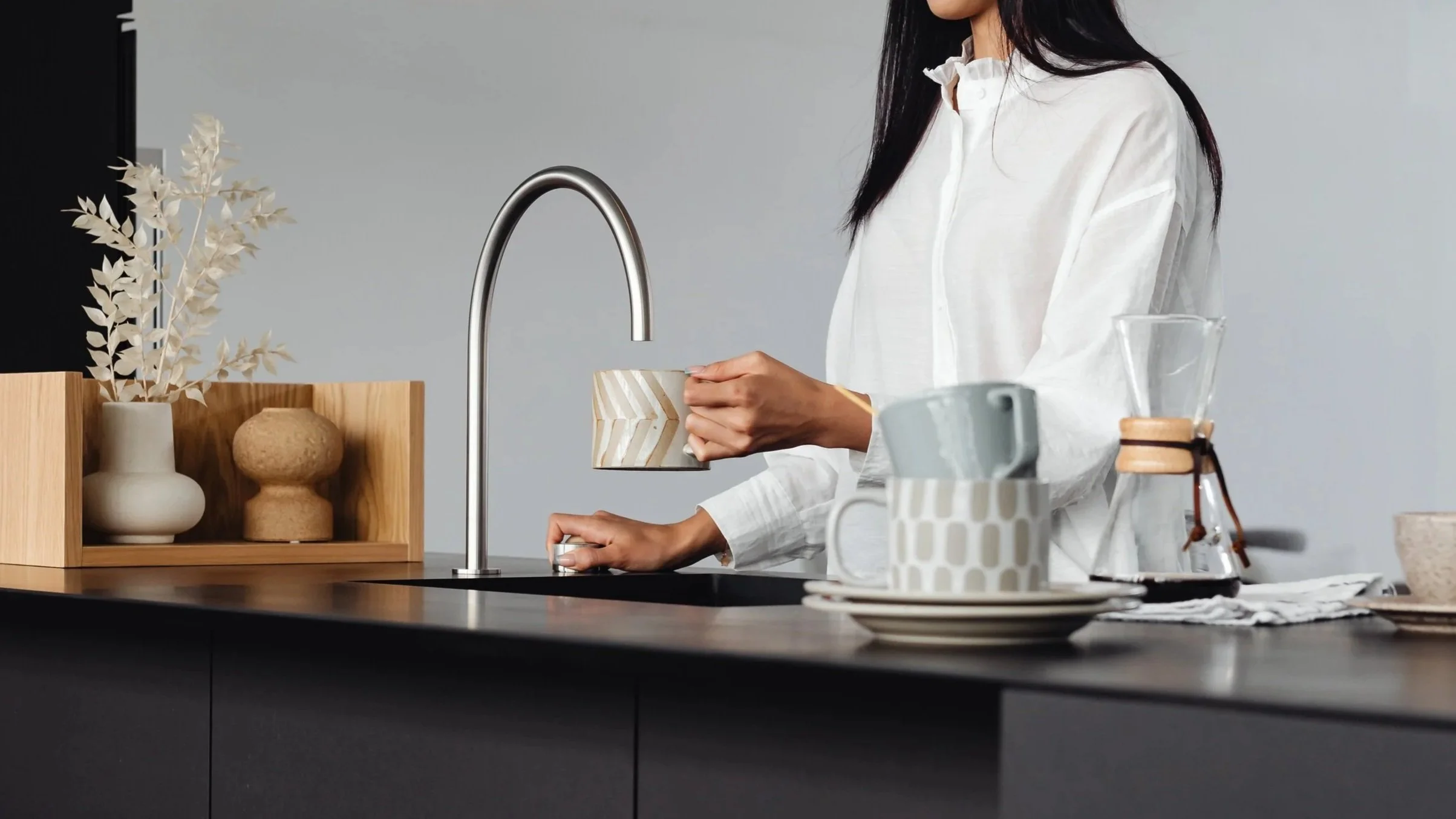
A dedicated instant hot water tap sounds minor until it becomes part of your daily routine, at which point going without feels like a genuine step backward. Instant boiling water for tea, coffee, blanching vegetables, or loosening a stubborn jar lid without waiting for a pot to boil is one of those small daily frictions eliminated entirely. The best installations pair the hot water tap with the filtration tap in a streamlined fixture that keeps the sink area clean and uncluttered. Brands like Quooker have become standard at the high end and are worth knowing about for their reliability and design quality.
A Butler's Pantry
A butler's pantry is the feature that most clearly separates a kitchen designed for cooking, from one designed for entertaining. It provides overflow storage, a secondary prep surface, a place to stage courses before they reach the table, and somewhere to manage the organized chaos of hosting without any of it spilling into the main kitchen. The sink in the butler's pantry handles the bar glasses, the serving pieces, and the end of evening cleanup without touching the main kitchen at all. For clients who entertain regularly, a butler's pantry is indispensable. For clients who don't entertain frequently, it still earns its footprint as the most functional storage space in the house, absorbing the small appliances, the extra dishes, and the pantry overflow that would otherwise crowd the main kitchen.
At the high end, a butler's pantry also creates a natural home for the coffee station, the wine fridge, and the beverage setup, keeping all those equipments accessible but out of sight when not in use. Which brings us to several of those features directly.
A Coffee Station
A dedicated coffee station is one of the most requested features in a high-end kitchen, and the most well-designed ones are invisible when the kitchen is at rest. A built-in espresso machine, a drawer for pods or beans, a small sink or connection to the water line, and outlets for grinders and steamers, all concealed behind cabinetry that closes flush with the surrounding kitchen when the morning rush is over. The coffee station that lives on the counter permanently, surrounded by cords and accessories, is a design compromise. One that disappears when you don't need it is the right solution.
An Appliance Garage
The appliance garage is the broader version of the coffee station principle: a dedicated, concealed space for the stand mixer, the toaster, the blender, and whatever other small appliances a family uses regularly but doesn't want on display. A well-designed appliance garage has outlets inside, enough depth to accommodate the largest appliance in the collection, and a door that closes completely flush with the surrounding cabinetry. It keeps the counter clear, the kitchen looking intentional, and the appliances genuinely accessible rather than buried in a lower cabinet.
A Magic Corner
Corner cabinets are one of the most persistently wasted spaces in a kitchen, and a magic corner unit is the right solution for clients who want to use every inch of their kitchen intelligently. A magic corner is a pull-out system that brings the contents of a corner cabinet fully out into the open in two linked shelves, eliminating the need to reach into a dark corner for anything. At the high end, these systems are available in finishes and configurations that feel as intentional as the rest of the cabinetry rather than a utilitarian add-on. If your kitchen has a corner cabinet, a magic corner should be in the design from the start.
Pull-Out Drawers Throughout
The same principle that applies to the magic corner applies to lower cabinetry broadly: drawers over doors, most of the time. Pull-out drawers in lower cabinets mean everything is visible and accessible without crouching, reaching, or removing front items to get to the back ones. Pots, pans, dry goods, cleaning supplies, and even trash and recycling all work better in drawers than behind doors. At the high end, soft-close drawer mechanisms, full-extension slides, and custom interior fittings for specific uses, cutlery, spices, pots with their lids stored together, are the details that make a drawer system feel purposeful and refined rather than simply functional.
A Beverage Fridge and Wine Fridge
A dedicated beverage fridge and a separate wine fridge are two features that earn their place in any kitchen designed for a family that entertains. A beverage fridge positioned near the island or the informal dining area means drinks are accessible without opening the main refrigerator constantly throughout an evening. A wine fridge with proper temperature zones for both reds and whites, positioned in or adjacent to the butler's pantry, keeps the wine collection organized, properly stored, and immediately accessible without a trip to the cellar. At the high end, integrated models that sit flush with the cabinetry and match the surrounding finish are the right specification. A freestanding unit on the floor is a workaround, not a solution.
A Second Sink
A second sink in the kitchen is one of those features that most clients don't know they need until they've spent a year in a kitchen where two people are cooking at the same time and fighting for access to one. The second sink belongs at the island or at the prep area, separate from the main sink which handles the heavy cleanup. It keeps food prep, hand washing, and vegetable rinsing entirely separate from the washing up, and makes the kitchen function as a collaborative space for families who cook together. A second sink is an opportunity for a beautiful smaller fixture in a complementary or contrasting finish to the main sink, which can be one of the more elegant details in the kitchen.
A Double Dishwasher
For larger families or clients who entertain frequently, a double dishwasher is a practical addition in a kitchen, and one of the most consistently appreciated. Two dishwashers running simultaneously cuts the post-dinner cleanup time in half and eliminates the after-party morning of a counter full of dishes that didn't fit. The most elegant approach is to integrate both dishwashers symmetrically on either side of the sink, which keeps the kitchen looking balanced and makes the workflow intuitive. For clients who host regularly, this is not a luxury. It's a capacity decision.
A Speed Oven
A speed oven combines convection, microwave, and sometimes steam cooking in a single unit. It is one of the most underspecified appliances in kitchens and one of the most transformative for daily cooking. It eliminates the need for a standalone microwave, and replaces it with a far more capable appliance that can roast, bake, steam, and reheat with professional results. It's also the perfect solution for a quick weeknight dinner for two without heating up a full-size oven, which is a small daily convenience that adds up considerably over time. Brands like Miele, Wolf, and Gaggenau make speed ovens that integrate beautifully into tall cabinetry at eye level, which is both the most ergonomic and the most visually elegant placement. For clients who cook seriously, this is the appliance upgrade that changes the most about their daily relationship with the kitchen.
What We're Seeing at the High End
Beyond the features above, a few additions are increasingly appearing in the high-end kitchens we're designing and admiring. Integrated charging drawers with wireless charging pads built into a drawer surface keep devices powered and off the counter entirely. Warming drawers, positioned below the main ovens, keep dishes and food at temperature during a dinner party without the compromises of a warming plate. And pot filler faucets mounted on an articulating arm above the range eliminate the daily task of carrying a full pot of water from the sink, a small friction that compounds over years of cooking.
The kitchen is where the quality of a renovation is most immediately felt and most honestly tested. Features that make it perform efficiently are the ones worth prioritizing from the very beginning of the design process, before the tile is selected and before the cabinetry is drawn. Getting them right is what separates a kitchen that looks the part from one that earns its place in daily life.
Nubuor Designs is an interior design studio based in Beacon Hill, Boston, working with homeowners across the country on renovations that deserve to be done right. If you're planning a kitchen renovation and want to make sure every detail is considered from the start, we'd love to hear more about you and your home. Let's Talk.
Related Posts: