Lighting: Jewelry of a Well-Designed Home
Written by Margaret Nubuor
Founder & Interior Designer, Nubuor Designs
Ask any of our clients what our favorite part of the design process is and they will say lighting. They are right. Most designers treat lighting as one of the last decisions in a project. We place it near the front, and sometimes design entire rooms around a single fixture. That should tell you how seriously we take it.
Good lighting sets the tone for a space in a way that no other design decision quite replicates. Furniture needs to be functional and comfortable for the owners, their children, their guests, and their pets. Rugs need to be beautiful and wear well over time. But with lighting, as long as a fixture provides the right quality and quantity of light for the space, you can be as restrained or as extravagant as the room calls for. It is one of the few elements that is always in your line of sight when you are in a room. It engages the vertical space above your head in a way that almost nothing else in an interior does. And unlike a sofa or a console, it can be as practical or as whimsical as you'd like without compromising its purpose.
Lighting is, in every sense that matters, the jewelry of a well-designed home. It deserves to be considered that way.
Treat It Like Art
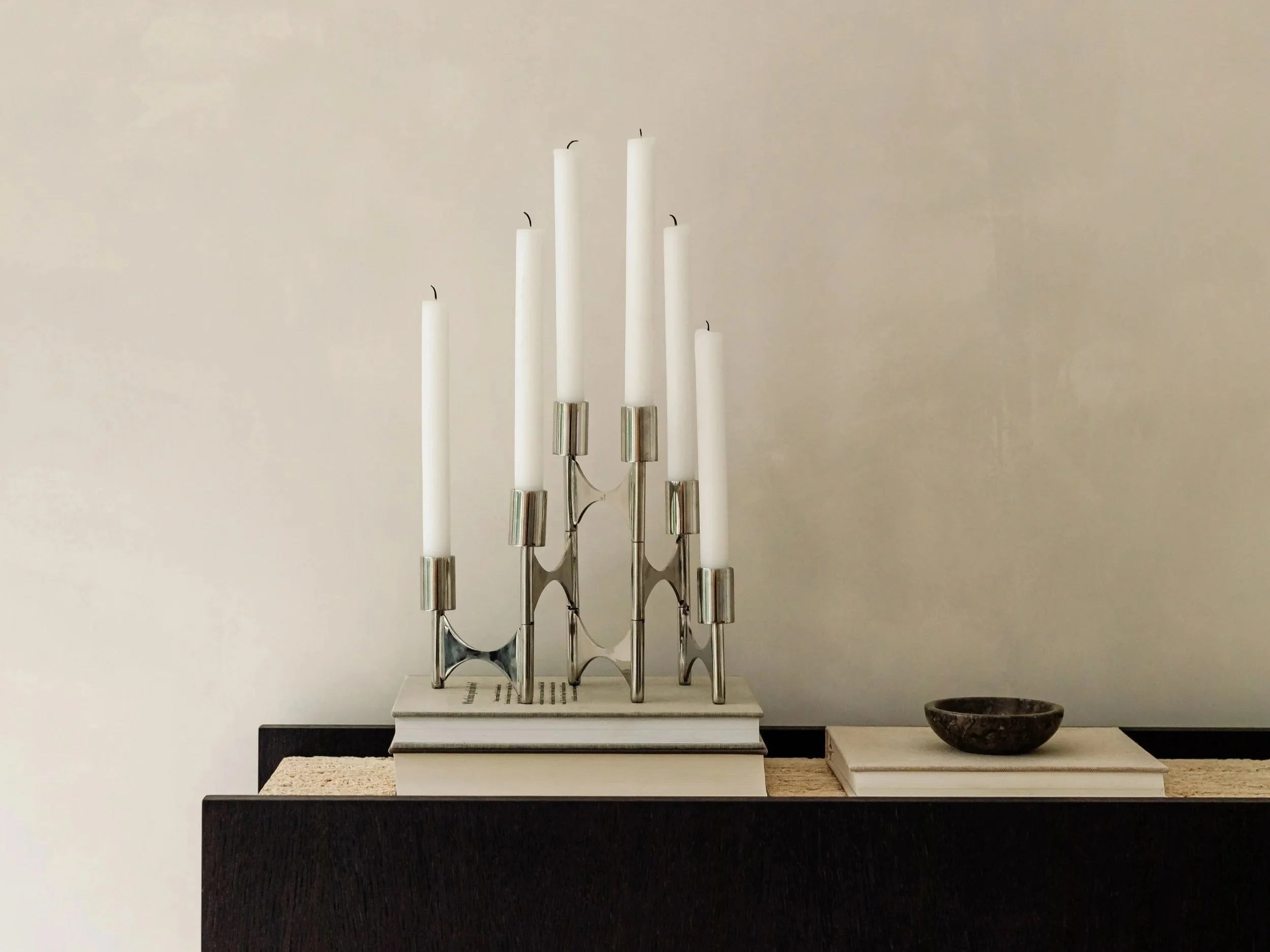
The best light fixtures are not products but sculptures. A hand-forged iron chandelier, a Murano glass pendant, a sculptural brass sconce made by an atelier that has been working in the same tradition for generations. These are things made by someone, somewhere, with real skill and real material. They have presence in a room the way a painting has presence, and they deserve to be selected with the same seriousness and the same eye.
The tendency in residential design, particularly at the production end of the market, is to treat lighting as a finishing detail. Something selected from a catalog after everything else is decided, sized to fit a budget that has already been largely spent. This results in rooms that are beautifully designed in every other respect and lit with fixtures that add nothing to the space. Fixtures that are merely adequate. Fixtures that no one ever notices, which is not the same thing as fixtures that disappear gracefully.
Light fixtures in a well-designed room should be noticed. Not distractingly so, but noticed nonetheless. They should be the thing a guest mentions when they walk in. Things you still appreciate five years after the project is finished. This desired feeling requires treating them as art from the very beginning of the design process, not as an afterthought at the end of it.
Real Finishes Only
This is a position we hold firmly: lighting fixtures should be specified in real finishes. Solid brass, not brass plate. Unlacquered bronze, not painted to look like bronze. Hand-applied patina, not a factory finish designed to approximate one. The difference is immediately apparent in person and becomes more apparent over time as real finishes develop the kind of character that manufactured ones cannot replicate.
Unlacquered brass is one of our most consistent recommendations. It starts bright and warm and develops a living patina over time, darkening in the areas that are handled, mellowing in the areas that are not, becoming over years something that could not have been bought that way. It rewards a home that is actually lived in.
Polished nickel, oil-rubbed bronze, blackened steel, hand-rubbed antique brass: these are the finishes worth specifying. They are available from manufacturers who take their craft seriously and they are worth the premium they command over their plated or painted equivalents.
The Hierarchy of Fixture Types
Different fixtures play different roles in a room, and understanding this allows a lighting plan to layer beautifully rather than simply illuminate adequately.
Chandeliers are the statement. They anchor a room, establish its scale, and signal its intention. A chandelier in a dining room is not just a light source over a table. It is the organizing element of the room, the thing everything else responds to. The fact that they extend down to meet the table below draws the eye upward and brings the ceiling into the design conversation in a way that a standard flushmount never could. That is what the right chandelier does. It should be sized generously, hung at the right height, and chosen with the full room in mind. Undersized chandeliers are one of the most common and most visible mistakes in residential lighting. When in doubt, go larger.
Pendants are more versatile and more intimate than chandeliers while still drawing the eye up towards the ceiling. A single pendant over a kitchen island, a pair flanking a bed, a cluster at varying heights in an entryway. Pendants work at a human scale in a way that chandeliers don't always, and they offer some of the best opportunities in a home to introduce an artisan-made object into a functional context.
Sconces are the workhorses of decorative lighting and among the most impactful fixtures in a home for the investment they require. A well-chosen pair of sconces flanking a mirror, a fireplace, or a bed does more for the atmosphere of a room than almost any other single addition. They provide eye-level light that overhead fixtures cannot, which is the most flattering and most functional light.
Table and floor lamps are the layer that makes a room feel inhabited rather than staged. They provide warmth, intimacy, and the kind of low ambient light that overhead fixtures simply cannot replicate. A room without lamps is a room that cannot fully relax. Invest in beautiful lamp bases and treating them as objects in their own right rather than purely functional items.
Flushmounts are often the lighting type treated with the least care and deserving of considerably more. In rooms without the ceiling height for a pendant or chandelier, a flushmount is not a compromise. It is an opportunity. There are extraordinary flushmounts being made right now in plaster, blown glass, brass, and ceramic that add as much to a room as any hanging fixture. They simply require the same intention in selection.
The Power of Contrast
One of the most compelling moves in decorative lighting is the deliberate use of contrast. A vintage fixture in a new, contemporary space adds soul and patina that no new object can replicate. A modern fixture in a traditional home, on the other hand, allows the historic architectural details to stand out by drawing attention to the contrast between them and the clean lines of the contemporary piece. Both moves work because they create tension and interest, and because they signal that the designer was not simply looking to match the architecture.
Going bold with colored glass or sculptural metal adds drama and modernity. Classic finishes like linen, brass, and polished nickel make a fixture lean timeless. The breadth of what is available, across periods, materials, styles, and scales, is one of the great pleasures of lighting selection, and the willingness to move across that range rather than staying safely within a single register is what produces rooms that feel genuinely designed.
On Recessed Lighting
We use recessed lighting sparingly and deliberately, and we'd encourage any client planning a renovation to do the same. A ceiling punctuated with recessed cans is a ceiling that has been treated as infrastructure rather than as an architectural surface. It provides even, adequate illumination and almost nothing else.
Recessed lighting has its place. Task lighting in a kitchen, directional spotlights on artwork, accent lighting in a bookshelf or niche. In these contexts it is the right tool for the job because it disappears and lets the object it illuminates take the attention. In a living room, a dining room, or a bedroom, recessed lighting as the primary light source is a missed opportunity of significant proportion.
Every recessed can in a ceiling is a fixture that didn't get specified there. Every fixture that didn't get specified is an object that won't bring beauty, craft, or warmth to the room. The discipline of minimizing recessed lighting forces better decisions elsewhere, and those decisions are what make a room feel designed rather than simply illuminated.
What Good Lighting Does to a Room and to the People in It
The impact of lighting on human mood is well documented and consistently underestimated in residential design. Warm light at low levels in the evening signals to the body that the day is winding down. Bright light in the morning supports alertness and energy. The warmth of a well-chosen lamp at the end of a long day creates a sense of arrival and comfort that no overhead fixture can replicate. These are not decorating preferences. They are physiological responses to light, and a home that works with them rather than against them is a home that feels better to live in at every hour of the day.
The property value dimension is equally real. Homes with layered, high-quality lighting consistently command more attention in the market than those without. It is a detail that sophisticated buyers notice immediately and that photographs well enough to communicate even in listing images. A beautiful chandelier in a dining room, a pair of extraordinary sconces in a primary bedroom, a blown glass pendant in a kitchen: these are the details that make a home memorable.
More than any of that, good lighting is what makes a home feel like the best version of itself. It is the layer of design that most directly governs how the space feels to be in, how the materials read, how the colors shift, how the room invites you to stay longer than you planned. It is the jewelry of the well-designed home. It deserves to be chosen that way.
Nubuor Designs is an interior design studio based in Beacon Hill, Boston, working with homeowners across the country who believe that a well-curated space is one of life's great pleasures. If you're ready to make yours one of them, we'd love to hear more about you and your home. Let's Talk.