Metal Finishes That Define a Room
Written by Margaret Nubuor
Founder & Interior Designer, Nubuor Designs
Every room in a well-designed home contains a decision that most clients make too quickly and live with too long. The metal finish. It is on the faucet, the cabinet hardware, the light fixture, the door handle, the towel bar, and the switch plate. It is always in plain sight, always being touched, and always changing. Few specifications do more to define how a room feels, and few are given less thought before they are made. Here is our guide to the ones worth understanding before you choose.
Brass
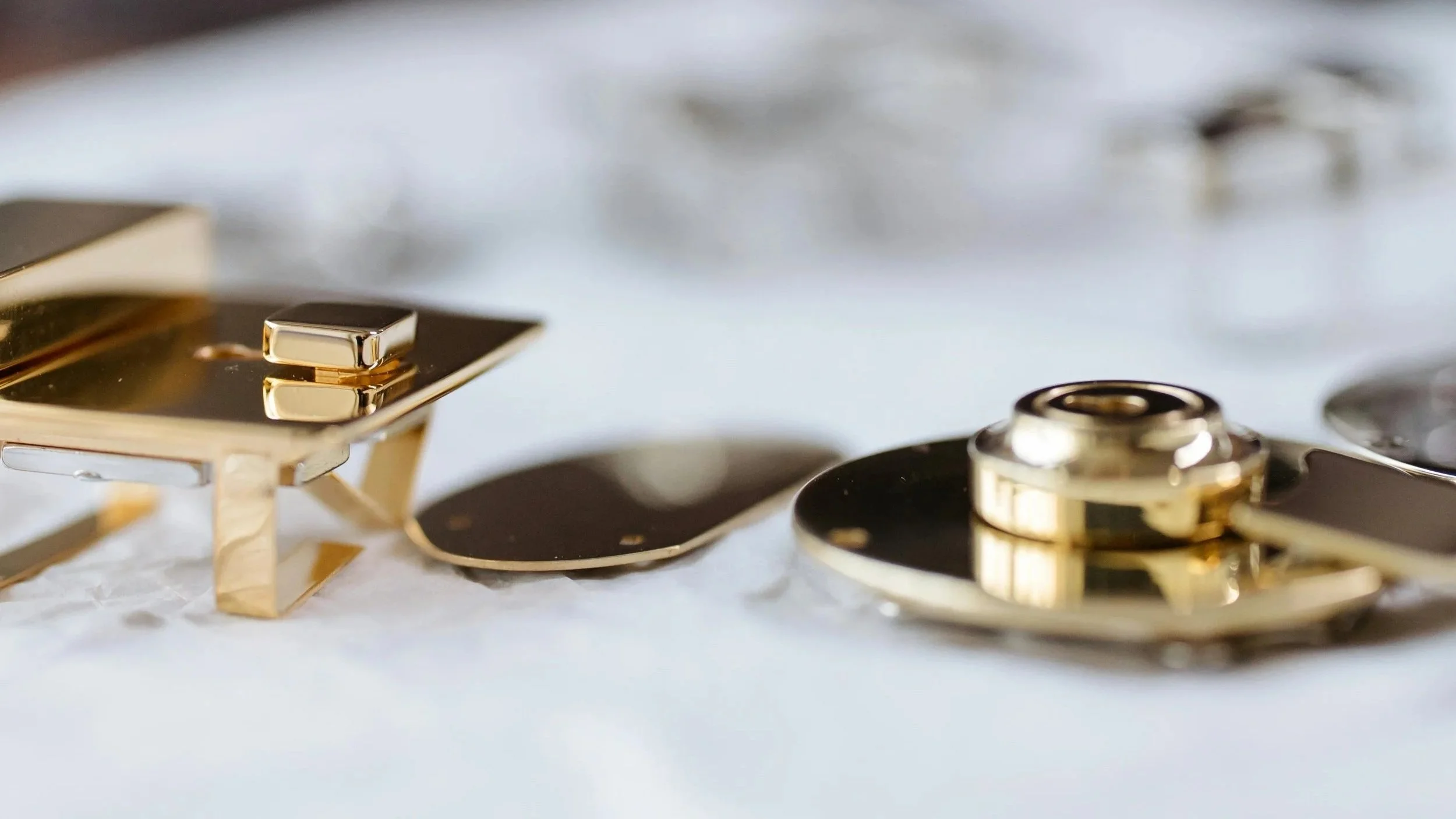
Brass is the finish we return to more than any other. It is warm, sophisticated, and works across a wider range of interior styles than most clients expect, pairing beautifully with marble, dark wood, linen, plaster, and stone. The most important decision within the brass category is not which brass to choose but which relationship with brass you want.
Unlacquered Brass
Unlacquered brass starts warm and golden and develops a patina over time, darkening in the areas that are handled most and mellowing in the areas that are not. It becomes over years something that could not have been bought that way. The patina is not a flaw. It is the point. A client who loves the aged look of antique brass will find it one of the most satisfying specifications in a home. A client who wants consistent shine should choose lacquered brass instead.
Lacquered Brass
Lacquered brass offers the same warm golden tone protected with a clear coat that prevents patination. It stays shiny and consistent, which is exactly what some clients want. The honest caveat is that lacquer can wear over time in high-use areas, creating an uneven appearance. For clients who want the look of brass with maximum durability, PVD, which we will come to shortly, is worth knowing about.
Polished Nickel
Polished nickel is one of the most refined and most underspecified finishes in American residential design. It has a warmth and a depth that chrome does not, a soft silver with subtle golden undertones that reads as sophisticated rather than clinical. In the right room a polished nickel faucet or a pair of sconces has a quality that feels almost jewelry-like. It shows water spots and fingerprints more than brushed finishes, which is worth considering in high-use areas, but the tradeoff in visual quality is significant.
Polished Chrome
Polished chrome is the finish for the hyper-modern interior, and in that context it is extraordinary. Its mirror-bright surface creates a crisp, almost surgical contrast against virtually everything around it, white marble, dark stone, matte plaster, raw concrete, in a way that no other finish replicates. Outside of that context it can read as clinical rather than considered. It is a finish with a very specific personality, and that personality needs to match the room it is in.
Brushed Finishes
Brushed finishes share a common characteristic: a matte or satin surface that reduces reflectivity, hides fingerprints and water spots, and reads as quieter and more considered than polished counterparts. Within this family, the metal itself still matters.
Brushed Nickel is the most practical and forgiving finish in the category. Its soft gray-silver surface hides fingerprints and water spots with remarkable effectiveness and requires almost no maintenance. It is the finish we recommend most readily to clients who want something that will perform beautifully over time without requiring management. Its limitation is that it does not carry the same design authority as unlacquered brass or polished nickel. In a project where the hardware is meant to contribute to the design conversation, brushed nickel tends to step back rather than forward.
Brushed Brass offers the warmth of the brass family with the lower maintenance and quieter presence of a brushed surface. It ages more slowly and more evenly than unlacquered brass, which suits clients who want warmth without the full commitment to a living finish.
Brushed Gold is more glamorous than brushed brass and more restrained than polished gold. In a bathroom or dressing room where the brief calls for warmth and a certain luxurious quality without ostentation, brushed gold is often exactly the right answer. It pairs particularly well with deep colors, rich textiles, and marble with strong veining.
Brushed Stainless Steel is the finish of the sleek, hyper-modern interior. In a kitchen where the appliances are stainless, brushed stainless fixtures and hardware create a cohesive material language that feels intentional and resolved. Beyond the kitchen it can read as cold or overly technical, which is worth considering before specifying it more broadly.
Oil-Rubbed Bronze and Aged Bronze
Oil-rubbed bronze has a deeply specific personality: dark brown to nearly black with copper undertones, it suits interiors of warmth and weight. In a traditional library or a room with dark wood and stone it feels inevitable. In a clean contemporary interior it can feel heavy and out of place. The finish wears in high-touch areas to reveal lighter bronze beneath, which some clients find beautiful and others find unwelcome. That conversation is worth having before specifying it, not after.
Aged bronze is a lighter and less dramatic expression of the same family, working in a broader range of interior styles with somewhat less intensity.
Blackened Steel and Matte Black
Blackened steel, produced through a chemical or heat treatment process that converts the surface of the metal itself, has a depth and variation in tone that mass-produced matte black finishes cannot replicate. It reads as architectural and grounded, with a warmth beneath the darkness that reveals itself in certain light conditions.
Matte black as a category ranges from extraordinary to poor depending on the manufacturer. At the high end it is sophisticated and contemporary, working particularly well in rooms with strong architectural character. At the low end it wears unevenly in high-touch areas, revealing lighter metal beneath in a way that reads as deterioration rather than character. This is a finish where quality matters enormously.
Copper
Copper is the most distinctive and most demanding finish on this list. It develops a patina that moves from warm rosy orange through deep brown to, in wet environments, the blue-green verdigris that is one of the most visually striking natural aging processes in a home. It works best as a singular statement rather than a repeated finish. A copper sink in an otherwise restrained kitchen, a copper range hood where everything else steps back: these are the applications where copper earns its full effect.
PVD: The Finish Worth Knowing About
Physical vapor deposition, known as PVD, is one of the most significant developments in metal finishing of the past two decades and one that most residential clients have never encountered. PVD bonds an extremely thin layer of material to the surface of a metal under high heat and vacuum conditions, creating a finish that is extraordinarily durable, resistant to wear, tarnishing, and patination, and available in virtually any finish aesthetic.
The practical implication is significant. A client who loves the look of unlacquered brass but does not like the idea of it changing can specify a PVD brass finish that looks identical to its unlacquered counterpart but will remain consistent for decades. A client who wants matte black without the risk of wear can specify PVD matte black with confidence. It is the answer for clients who want the beauty of a living finish without the evolution, and one of the more valuable pieces of information available to anyone making hardware and fixture decisions.
On Mixing Metals
Metals can and should be mixed, but the instinct to mix within the same family usually reads as accidental rather than intentional. Polished nickel alongside brushed nickel, polished nickel alongside chrome: when two finishes are similar enough in tone to be almost the same, the eye reads the difference as an error rather than a choice.
The combinations that read as genuinely intentional move across metal families rather than within them. Unlacquered brass alongside polished nickel. Polished nickel alongside oil-rubbed bronze. Brushed gold alongside blackened steel. The tonal differences between the finishes signal intention and gives each piece its own clear identity in the room.
Two to three finishes is the working limit. A dominant finish anchored by one or two accent finishes used sparingly.
The Finish That Ages Well
Every finish ages differently, and the right choice is entirely personal. There is no objectively correct answer.
Some clients find deep satisfaction in a finish that develops character over time. The darkening of unlacquered brass, the verdigris at the edge of a copper sink, the wear that reveals bronze beneath an oil-rubbed surface: for the client who responds to these changes they are one of the great pleasures of a well-loved home.
Other clients want a finish that stays exactly as specified. For them, lacquered finishes, brushed finishes that age slowly and evenly, and PVD coatings that resist change entirely are all excellent answers. There is no compromise in choosing consistency. It is simply a different and equally valid relationship with the same object over time.
What is always true is that quality matters. A well-made finish from a high quality manufacturer ages consistently and gracefully. A poorly made finish wears unevenly and looks worse over time regardless of how beautiful it appeared at first. The investment in quality hardware and fixtures pays daily dividends for as long as the home stands.
Nubuor Designs is an interior design studio based in Beacon Hill, Boston, working with homeowners across the country. If you're planning a redesign and want to make sure every detail is considered from the start, we'd love to hear more about you and your home. Let's Talk.
Related Posts: