What Is Full-Service Interior Design? (And Is It Right for You?)
Written by Margaret Nubuor
Founder & Interior Designer, Nubuor Designs
Plainly put, full-service interior design is an end-to-end design and project management service that takes a home from initial concept through final installation, with the designer managing every phase on the client’s behalf. Space planning, material selections, contractor coordination, furniture sourcing, procurement, project management, and styling. Not just design advice, but a partner who manages every decision you have approved through the many moving parts required to bring a home together.
The term gets used loosely in the industry, which creates confusion. Some designers offer full-service in name but hand off execution to junior staff or leave procurement to the client. At Nubuor Designs, full-service means Margaret Nubuor is with you from the first conversation through installation day, managing every aspect of the project personally. This is what that looks like in practice.
The Discovery Phase: Understanding Your Vision
Every full-service project starts with getting to know you, your home, and what you are hoping to achieve. We spend time talking through your lifestyle, aesthetic preferences, and goals for the space. This is not a quick conversation about favorite colors. We dig into what drives you crazy about your current space, how you actually use each room, and what success looks like for this project. We also visit the home to take measurements, assess natural light, traffic flow, and structural conditions, and identify opportunities you may not have noticed. By the end of this phase we have a clear picture of your vision and constraints. That becomes the roadmap for everything that follows.
Concept Development: Bringing Ideas to Life
Once we understand what you want, we translate it into actual design. We create floor plans, test furniture layouts, and determine which walls stay and which move in a renovation. We develop mood boards showing how colors, textures, materials, and styles will come together, and we align on the overall direction before getting into specific selections. Budget is checked continuously throughout this phase. Better to have honest conversations early than to fall in love with a direction that is not feasible.
Design Development: All the Decisions
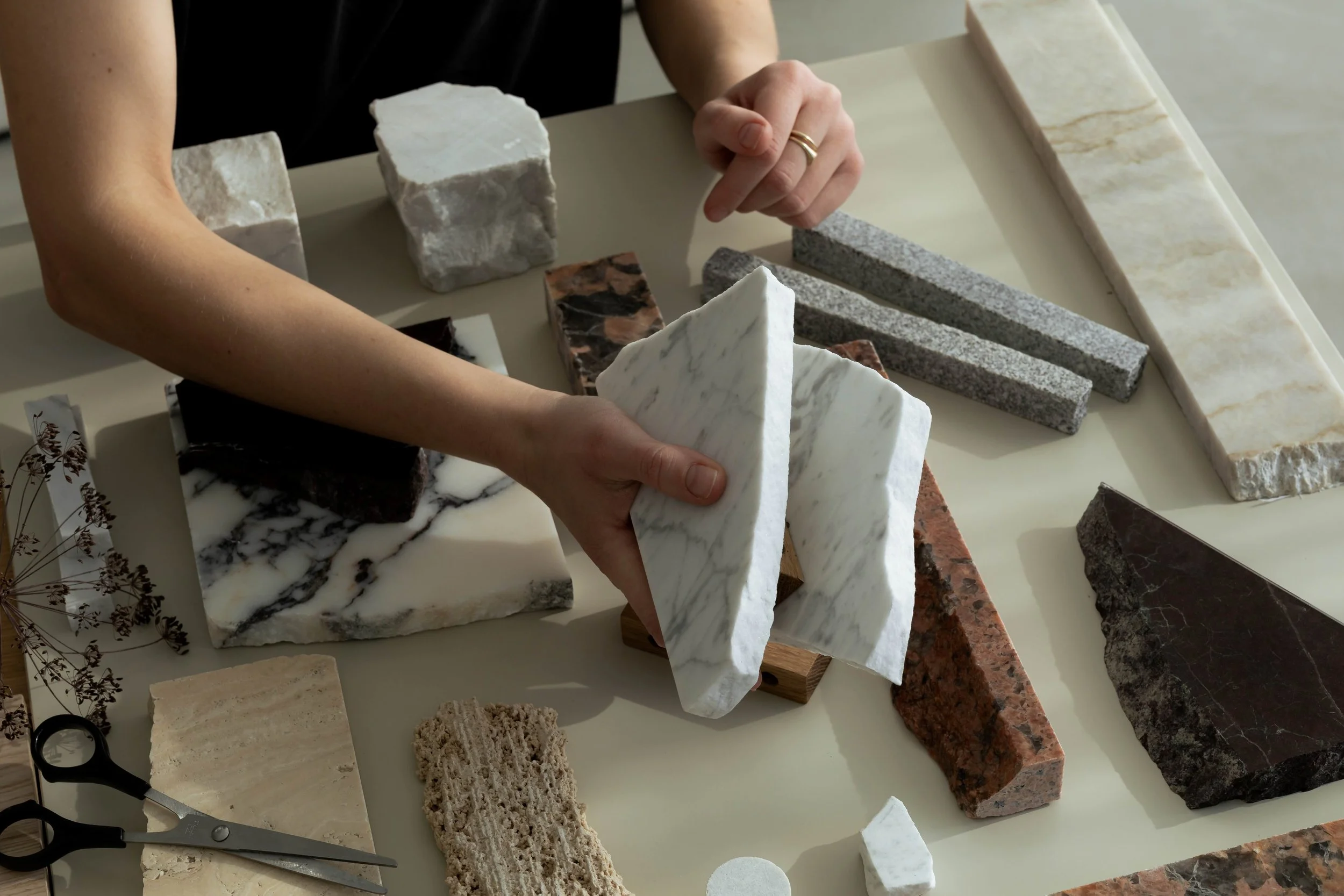
This is where every material decision gets made. For renovation projects, we select plumbing fixtures, appliances, tile, cabinet styles and finishes, flooring, countertop materials, hardware, paint colors, lighting fixtures, window treatments, and wallpaper. For each category we consider durability, maintenance, how it coordinates with other selections, and whether it suits your lifestyle. We source samples so you can see and feel materials in your actual space before committing.
For projects with custom millwork or built-ins, we design those elements in detail with your storage needs in mind, producing drawings and specifications so contractors and fabricators know exactly what to build. For renovation projects, we also create detailed construction documents: floor plans, elevations, lighting plans, electrical layouts, and plumbing locations. These are not optional. They are what contractors need to bid accurately and build correctly, and they are what protect you when a question comes up in the field.
While construction plans are being finalized, we plan all the furnishings in parallel: sofas, chairs, tables, beds, rugs, lighting, artwork, and accessories. Everything is specified and laid out so the furnishings and the renovation arrive at the same finished vision.
Procurement: Sourcing and Ordering
Once selections are approved, we handle all purchasing and logistics. You are invited to our design portal where you can see and track every approved product and its order status.
One of the benefits of working with a designer is access to trade-only showrooms and brands that do not sell to the public. In many cases we can also customize offerings to your exact preferences. Custom metalwork, bespoke lighting, specific finishes: we have the relationships to make those happen.
Lead times vary enormously. Custom furniture can take sixteen to twenty weeks before shipping. A vintage rug might arrive next week. We coordinate everything behind the scenes so items arrive when they are actually needed, or go to our receiving warehouse where they are inspected, stored, and white-glove delivered when the space is ready.
When items arrive we inspect everything for damage, defects, and incorrect specifications. If something is wrong we handle the returns, replacements, and vendor communication so you never have to deal with customer service headaches.
Construction Coordination: Managing the Build
If your project involves renovation, this is where we earn our fee. We help you find and evaluate contractors, request bids, and identify red flags. Because we designed the project and selected the materials, we know exactly what should and should not be in the contractor’s proposal.
Before work begins we meet with your contractor to review plans and make sure everyone understands the design intent. During construction we visit the site regularly, answer contractor questions, catch problems before they become bigger issues, and make design decisions in real time when the unexpected comes up. Things always come up. Materials get discontinued, measurements are off, something arrives broken. We solve these problems in a way that maintains design integrity while keeping the project on track.
Installation and Styling: Bringing It All Together
We schedule all deliveries, coordinate the installation sequence, and are on site to make sure everything goes where it is supposed to go. Once the furniture is placed we work with our styling partner to add the finishing touches: accessories, artwork, books, objects, pillows. This is where a good design becomes a great one. We close with a complete walk-through, address any concerns, and hand over care instructions and full documentation of everything specified.
How Is This Different From Other Design Services?
The difference comes down to who carries the work after the design is done. With full-service, that responsibility stays with the designer.
| Service Type | What’s Included | Who Manages Execution |
|---|---|---|
| Design Consultation | Advice, recommendations, and a plan in one or a few meetings | You |
| E-Design / Virtual Design | Design boards, shopping list, and layout options delivered online | You |
| Design-Only Services | Full plans and specifications, no purchasing or coordination | You |
| E-Design / Virtual Design | Everything from concept through installation, including procurement and contractor coordination | Your Designer |
Who Is Full-Service Design For?
Full-service design makes the most sense if you are doing a major renovation, do not have time to manage a project yourself, want every decision to be cohesive, or simply want to enjoy the process rather than be consumed by it. When someone is managing all aspects of the design, the result is more polished and intentional. Everything works together because it was planned together.
Full-service design is not for everyone. If you are on a tight budget, love the DIY process, and feel confident making design decisions and managing contractors yourself, you may not need it. But if you want professional guidance and hands-off management, it is the right fit.
What Does Full-Service Design Cost?
There is no simple answer because every project is different. Designers charge in different ways: flat fees, hourly rates, a percentage of the total project cost, or a combination. For a full-service residential project in the Boston area, you might see flat fees ranging from $40,000 to $100,000 or more depending on scope, hourly rates from $150 to $500 or more per hour, or a percentage of project cost typically between fifteen and thirty percent.
A full-service project can require five hundred to a thousand hours of work from concept through installation. You are paying for design talent, project management, vendor relationships, problem solving, and the expertise to make sure it is done right.
Is It Worth It?
Full-service design is costly upfront, but it often saves money in the long run through better decisions and avoided mistakes. It saves time, it reduces stress, and it almost always produces a better result than a homeowner managing the same project on their own.
Think about the value of your time, the cost of mistakes, and the stress of managing everything yourself. Now think about the difference between a space that is pretty good and one that is truly great.
Your home is one of your largest investments, and you also live in it every day. If you are already spending significant money on a renovation or furnishing project, investing in someone to manage the process and make sure it is done right is rarely the wrong call.
For most of our clients undertaking a major project, full-service design is not an indulgence but a necessity.
Nubuor Designs is an interior design studio based in Boston, working with homeowners across the country on projects that deserve to be done right. If you're planning a project and want to understand what working together actually looks like, we'd love to hear more about you and your home. Let's Talk.
Related Posts: