What a Designer Does During Site Visits
Written by Margaret Nubuor
Founder & Interior Designer, Nubuor Designs
Most clients assume that once construction begins, the designer's job is largely done. That with selections made, drawings issued, and a contractor, what happens on site from that point forward is a construction matter, not a design matter.
That assumption could not be further from the truth.
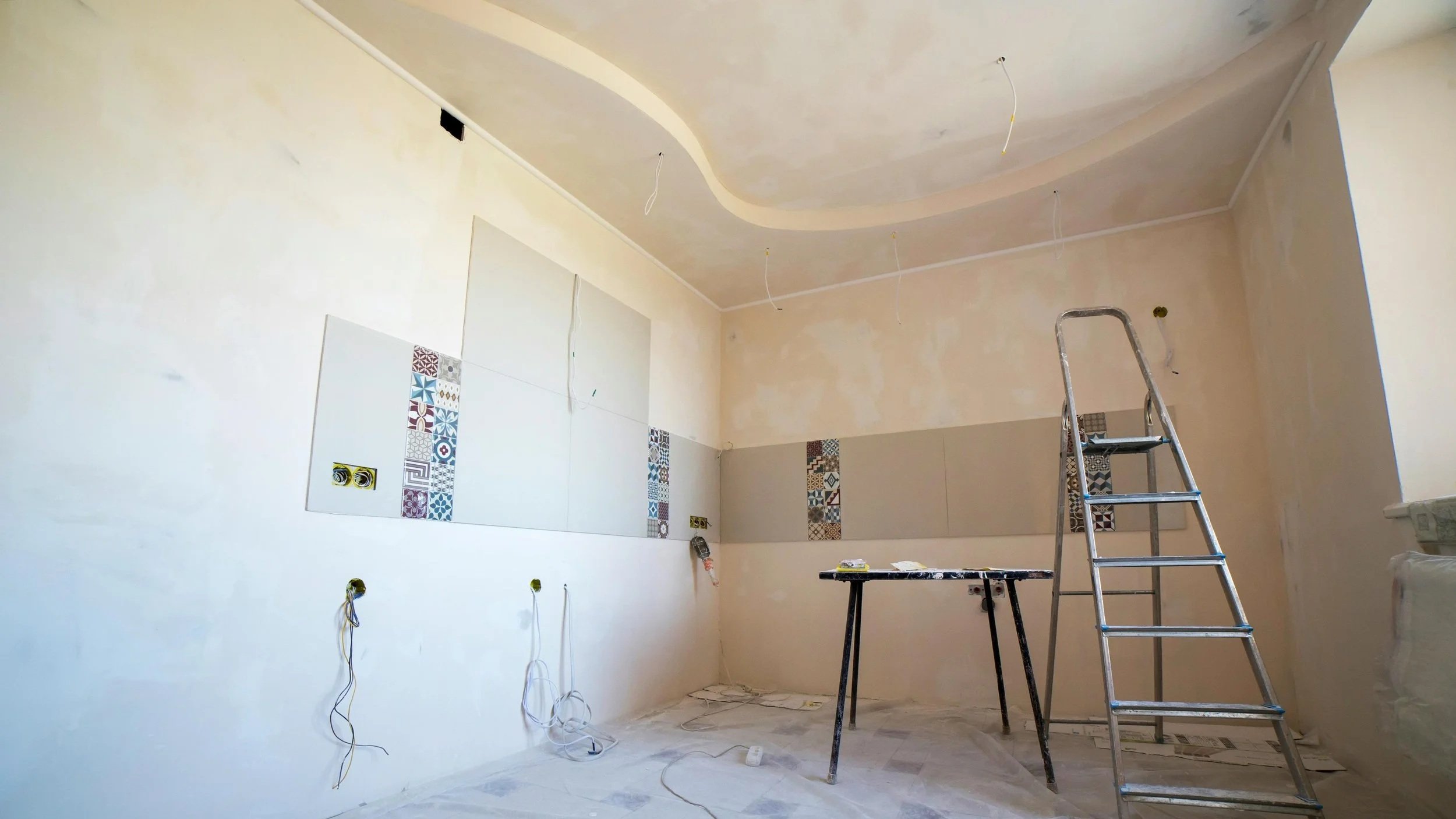
A renovation is not a linear translation of a set of drawings into a finished space but a live process. Walls move and field conditions differ from what was anticipated. Trades work from their own plans and their own sequencing, not always aware of every design decision that affects their scope. An electrician running wire would not necessarily know that a future wood-paneled will conflict with their switch or outlet location. A tile installer working efficiently might not always know why holding to a specific datum line matters for how the pattern will read across the entire room. These are not failures of skill but instead happen when a complex project moves forward without the right person in the room.
Triage and Advocacy
No new build or renovation proceeds exactly as drawn. When issues arise, there must be someone on site who can assess what a conflict actually means, distinguish between what is critical and what can be adjusted without consequence, and make a decision quickly enough that construction is not held up. That person needs to understand the design well enough to know which elements are important to the overall intent and which ones have room to move. They also need to know the homeowner: their priorities, their tolerance for certain trade-offs, and what they are hoping to live in the home when the project is done. Every decision on site is made in reference to that end point of a furnished, inhabited room, and working back from what separates a design judgment from a construction one.
Catching conflicts early also has a direct bearing on cost. Change orders fall into two categories: those driven by structural discoveries or conditions no one could have anticipated, and those driven by design decisions that were not fully resolved before construction reached that point. The first category is unavoidable. The second is largely preventable, and regular site presence is the primary tools for preventing it.
Electrical
Electrical rough-in is one of the most consequential phases of a renovation from a design standpoint, and one of the most time-sensitive. Once the wires are run and the boxes are set, they will be covered by drywall. We confirm every ceiling light location against the furniture plan, because a fixture centered on a ceiling and a fixture centered on a seating area are often not the same point. We verify switch locations against the full interior design scope, including wall treatments, paneling, and any feature that might affect where a switch can actually land. We check sconce mounting heights against the specific fixtures specified, because the right height for one fixture is not the right height for another. When something cannot be located exactly as drawn, we determine which elements are fixed and which can flex. That judgment belongs to the designer.
Mechanical
Mechanical systems are planned by a separate contractor working from a separate set of drawings, and the overlap between the mechanical plan and the interior design intent is rarely resolved automatically. It has to be managed. A bathroom exhaust fan positioned without reference to the lighting plan can land directly over a decorative ceiling fixture, producing a conflict that is expensive to correct once the ceiling is closed. Heated floor systems require coordination with the tile installation sequence; the order of operations matters, and a miscommunication between trades can compromise the system or the floor. Baseboard heating units placed without reference to the furniture plan can end up behind a large sofa, where they perform poorly and create a safety issue. In some cases a better solution is available if someone with design knowledge is present to propose it: routing supply air through cabinetry toe kicks rather than ceiling or wall registers produces a significantly cleaner result in a kitchen or butler's pantry. These are not decisions the mechanical contractor is positioned to make. They require the designer to be in the room.
Tile
Tile layout decisions are made at the start of installation and govern everything that follows. The datum line, the wall the layout is centered on, how the pattern meets a threshold or a niche: all of it is established early and very difficult to correct once it is underway. Holding to the right datum line is not an arbitrary preference. It is what determines whether the pattern reads as intentional across the full room or begins to drift in ways that are felt even if they cannot be named. We confirm the layout before any tile is set and stay in close communication with the tile installer through the process. The decisions made in the first hours determine the outcome of the entire installation.
Paint and Material Finishes
Paint color is a decision commonly made too early and in the wrong conditions. A color selected from a chip under artificial light in a showroom will behave differently on a wall that receives afternoon sun from the west, or in a room where the primary light source is reflected off a stone floor. The same is true of wood stains on floors and cabinetry. A stain approved on a small sample can read warmer or cooler, flatter or richer once it is spread across several hundred square feet of a specific wood with its own grain variation, or across cabinet faces in a room with a particular quality of light. We confirm paint colors and material finishes on site, in the actual space, under the actual conditions the room will have. That is the only context in which those decisions can be made correctly.
Weekly Site Presence
We visit every active construction site weekly. That commitment represents a significant portion of how we spend our time during a project, and it is non-negotiable. Construction moves faster than most clients expect, and a week without eyes on a site is long enough for decisions to be made, conditions to be set, and elements to be enclosed that cannot be revisited without real cost. Occasionally a visit is not possible: abatement work, newly installed wood floors that need to cure, or travel will sometimes make the site inaccessible. Those are exceptions. The rhythm is weekly, with a clear agenda each time. Site visits are separate from our weekly design meetings with our clients. The site visit is where we do the work. The design meeting is where we report on it, walk through anything requiring a client decision, and keep the project moving forward.
Your Role During Construction
Every client approaches site visits differently, and all of those approaches are valid. Some want to walk the site at the end of every weekly visit. Others prefer to stay off site entirely and trust that their interests are being represented. Some come only when a specific decision warrants it. What every client receives, regardless of how involved they choose to be on site, is consistent communication. The contractor provides regular project summaries. We are in direct contact with our clients whenever something comes up that affects their project, and we cover the week's progress and any open decisions in our standing weekly design meeting. Construction can feel opaque from the outside but part of our job is making sure it never does.
Nubuor Designs provides full-service interior design for Boston-area renovations, working with clients from the earliest stages of planning through final installation. If you're planning a project and want to make sure it's set up correctly from the beginning, we'd love to hear more about you and your home. Let's Talk.
Related Posts: